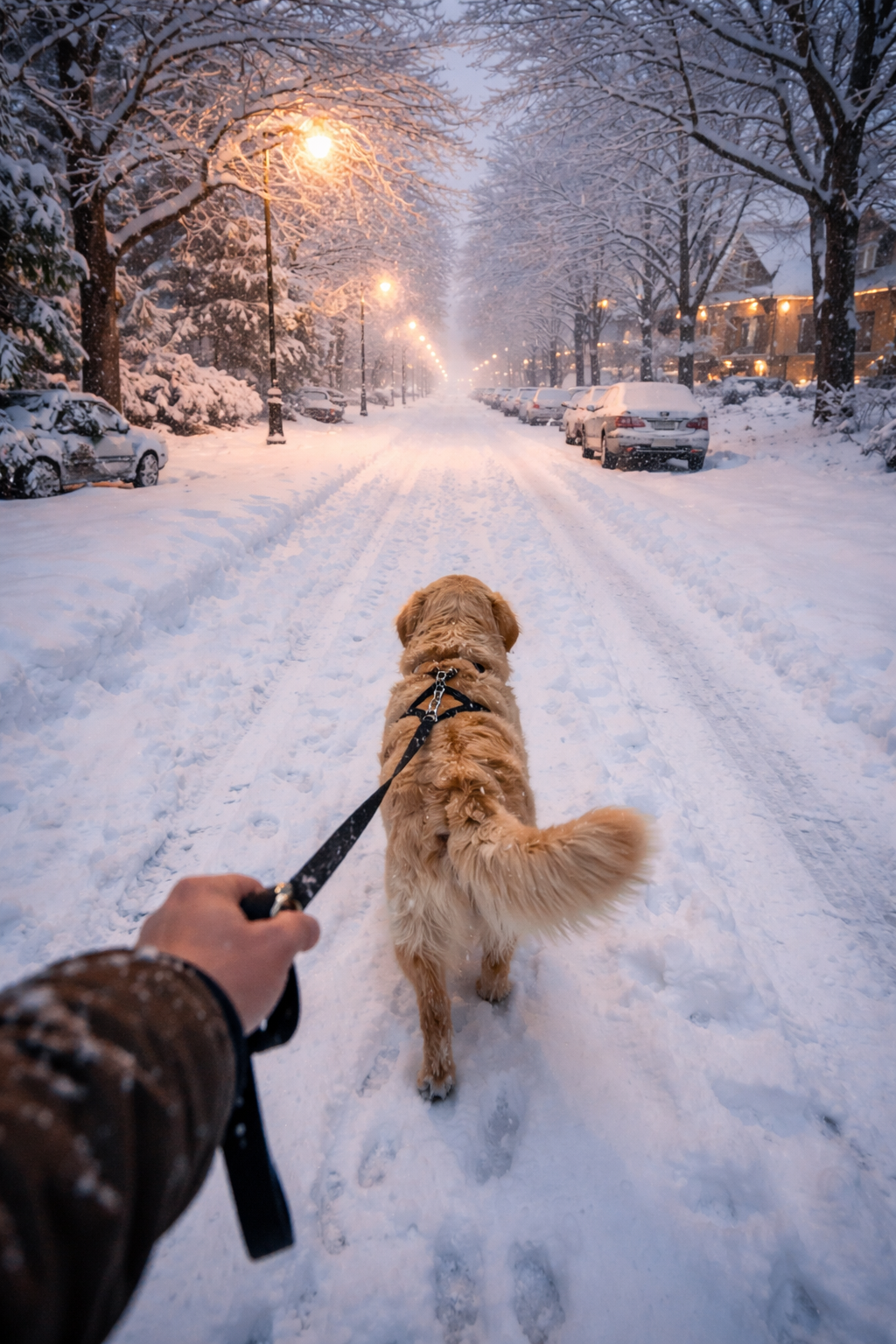
Winter Weather and Pet Sitting: Why Preparation Matters
Snowstorms are beautiful, but they can also disrupt routines, limit access to homes, and create unsafe conditions for both pets and pet sitters. As a professional pet sitting service, winter weather is not just an inconvenience for us, it is a safety and planning issue.
Preparing in advance ensures your pets receive consistent care, your sitters stay safe, and no one is left scrambling during a storm. A clear snow preparedness plan helps ensure your pets are cared for no matter what the forecast brings.
This guide walks through everything pet owners should plan for during winter weather, from snow removal to extended
power outages, and clearly outlines what your pet sitter can and cannot do during these events.
Snow Removal: Keeping Walkways Safe and Accessible
Why Snow and Ice Management Is Critical
During snowy conditions, pet sitters must safely access your home, walk pets, and perform essential care tasks. Icy walkways, unshoveled driveways, and blocked entrances create serious risks, including slips, falls, and missed visits.
For everyone’s safety, clients are responsible for ensuring safe access to their property.
Your Snow Removal Plan Should Include
Clients should arrange a reliable snow removal service before winter begins. This may include:
-
A professional snow plowing company
-
A trusted neighbor or family member
-
A local handyman or property maintenance service
The plan should cover:
-
Driveways
-
Walkways to all entrances used by the pet sitter
-
Steps, ramps, and gates
-
Areas where pets are walked or let outside
Salt or pet-safe ice melt should be applied regularly to reduce slipping hazards.
What Pet Sitters Can and Cannot Do
For safety and liability reasons:
-
Pet sitters do not shovel snow or apply ice melt unless explicitly stated in a signed agreement
-
Pet sitters will not risk injury to access unsafe properties
-
If access is blocked, care may be delayed or adjusted until it is safe
Clear expectations protect everyone and ensure continuity of care.
Weather Delays and Adjusted Visit Times
Understanding Winter Scheduling Realities
Snowstorms can affect road conditions, visibility, and travel time. Even with the best planning, visit times may need to shift.
Clients should understand that during severe weather:
-
Visit windows may be broader than usual
-
Visits may occur earlier or later than scheduled and length of visit may be adjusted
-
Emergency-only travel may be prioritized
This flexibility allows pet sitters to continue caring for their clients safely.
Emergency Access Information
Clients should provide:
-
Garage or alternate entrance access if available
-
Alarm instructions and emergency codes
-
Contact information for a nearby emergency contact
This information is invaluable if normal access points are blocked.
Preparing for an Extended Power Outage
Winter storms often bring power outages that last hours or even days. A detailed power outage plan ensures pets remain safe and comfortable.
Heating and Temperature Concerns
Clients should outline:
-
Backup heating sources, if available
-
Safe temperature thresholds for pets
-
Instructions for space heaters, if used, including safety precautions
Pet sitters will never operate unsafe equipment or devices without clear instructions.
Food, Water, and Medication Access
Power outages can affect:
-
Refrigerated pet food
-
Automatic feeders
-
Water supply in some homes
Clients should:
-
Store extra non-perishable pet food
-
Provide written feeding instructions for outage scenarios
-
Identify where bottled water is stored
If pets require refrigerated medication, include guidance on storage alternatives.
Lighting, Security, and Home Safety
Navigating a Home Without Power
Clients should inform pet sitters of:
-
Flashlight locations
-
Battery-powered lanterns
-
Backup batteries
Clear lighting access ensures safe movement within the home and proper pet care.
Security Systems and Power Loss
Some alarm systems reset or behave unpredictably during outages. Clients should:
-
Notify the pet sitter if alarms are affected by power loss
-
Provide instructions to prevent false alarms
-
List emergency contacts for alarm companies
This avoids unnecessary stress or emergency calls.
Pet-Specific Winter Considerations
Cold Weather Safety for Pets
Different pets tolerate cold differently. Clients should specify:
-
Maximum outdoor time during extreme cold
-
Use of pet coats or booties
-
Paw care instructions, especially for salt exposure
Pet sitters follow client instructions while also prioritizing animal safety.
Special Needs and Senior Pets
Older pets and those with medical conditions may require:
-
More frequent indoor potty solutions
-
Temperature monitoring
-
Adjusted activity levels
Clear instructions allow sitters to adapt care appropriately.
Communication During Severe Weather
Staying Connected
Clients should ensure:
-
Primary and secondary contact numbers are up to date
-
A local emergency contact is available
-
Preferred communication methods are listed
During storms, text or app-based updates may be more reliable than calls.
When Immediate Decisions Are Needed
If weather conditions worsen rapidly, pet sitters may need to make judgment calls in the best interest of the pet’s safety. Having prior consent for reasonable decision making helps avoid delays.
Emergency Supplies Checklist for Clients
A winter emergency kit that includes:
-
Extra pet food and treats
-
Bottled water
-
Medications and written dosing instructions
-
Leashes, harnesses, and carriers
-
Towels and blankets
-
Pet-safe ice melt
Keeping these items accessible supports uninterrupted care.
Why a Winter Plan Is Important
A documented snow and emergency preparedness plan:
-
Protects pets, pet sitters, and property
-
Reduces confusion during stressful situations
-
Demonstrates professionalism and responsibility
-
Creates peace of mind for everyone involved
Clients who prepare ahead help ensure their pets receive consistent, loving care no matter what winter brings.
Final Thoughts: Winter Preparedness Is Part of Loving Pet Care
Snowstorms and power outages are unpredictable, but preparation is not. By planning for snow removal, power outages, access issues, and communication, pet owners and pet sitters work together as a team.
A clear winter plan ensures pets stay safe, sitters stay protected, and care continues smoothly even during the harshest weather.
If you have questions about creating or updating your winter pet sitting plan, please reach out. Preparedness always works best when done early.
Looking for a reliable pet sitter or dog walker? Please contact buckspetnanny.com